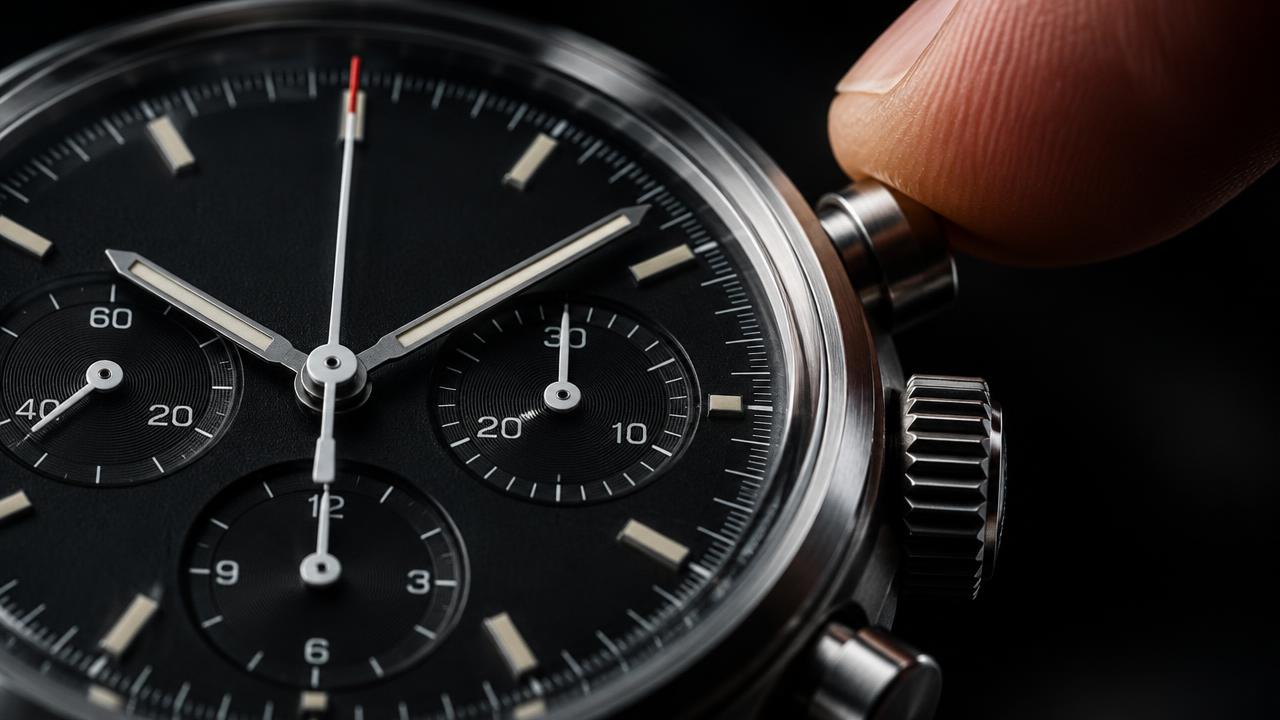
A chronograph function in a watch is a built-in stopwatch complication that allows you to measure elapsed time intervals (seconds, minutes, hours) while the watch continues to display the current time. Unlike a standard watch that only tells time, a chronograph combines regular timekeeping with a separate timing mechanism controlled by pushers (buttons) on the side of the case.
In 2026, chronographs remain one of the most popular and versatile watch complications, found in everything from $100 quartz models to $100,000+ luxury pieces like the Rolex Daytona and Patek Philippe Nautilus. This guide explains what the chronograph function is, how it works, the different types of chronograph movements, top models in 2026, and how to properly care for and display your chronograph watch with a Maison Valdor watch winder.
1. What Exactly is the Chronograph Function?
The chronograph function is essentially a stopwatch integrated into a wristwatch. It allows you to start, stop, and reset a timing mechanism without affecting the watch's regular timekeeping.
Key Components of a Chronograph
| Component | Function |
|---|---|
| Central Chronograph Hand | Large seconds hand on the main dial that starts/stops with the pushers. It remains at 12 o'clock when the chronograph is not in use. |
| Sub-dials (Registers) | Small dials that track elapsed minutes (30 or 60), hours (up to 12), and sometimes running seconds (to show the watch is running). |
| Pushers | Buttons flanking the crown (usually at 2 and 4 o'clock) to control the chronograph: top pusher starts/stops, bottom pusher resets to zero. |
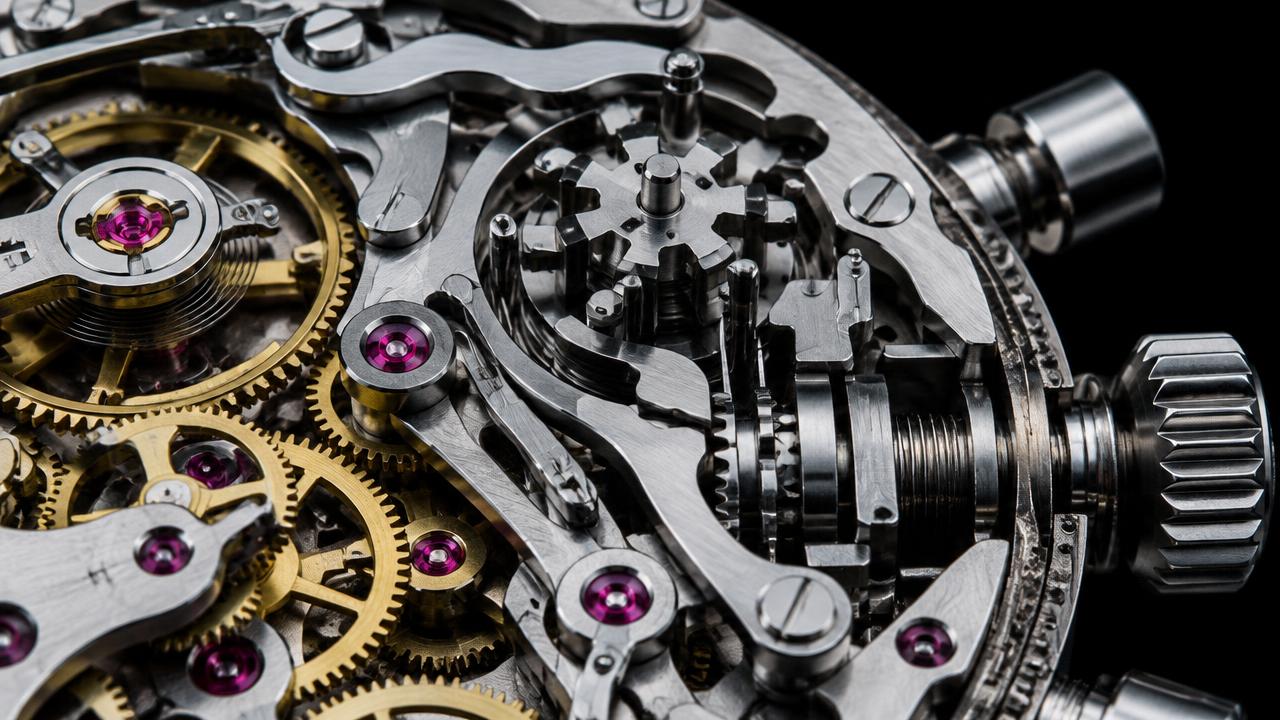
| Column Wheel or Cam | Internal mechanism that engages/disengages the chronograph gear train when pushers are pressed. Column wheels are smoother and more expensive; cams are simpler and more affordable. |
| Clutch | Mechanism that connects/disconnects the chronograph hand from the gear train. |
How to Use the Chronograph Function
- Start: Press the top pusher (usually at 2 o'clock). The central chronograph seconds hand begins sweeping.
- Stop: Press the top pusher again. The chronograph hand stops, allowing you to read the elapsed time.
- Reset: Press the bottom pusher (usually at 4 o'clock). The chronograph hand and sub-dials return to zero.
- Read: The central hand shows elapsed seconds, the sub-dial at 3 o'clock shows elapsed minutes (up to 30 or 60), and the sub-dial at 6 or 9 o'clock shows elapsed hours (up to 12).
💡 Important: Never press the reset pusher while the chronograph is running, as this can damage the movement. Always stop first, then reset.
2. How Does the Chronograph Function Work?
The chronograph function works by using a separate gear train and set of hands to measure elapsed time, independent of the main timekeeping function.
Internal Mechanism
When you press the top pusher (start/stop):
- The column wheel or cam rotates, engaging the chronograph clutch.
- The clutch connects the chronograph hand to the gear train.
- The central chronograph seconds hand begins sweeping, powered by the mainspring (automatic/manual) or battery (quartz).
- The sub-dials track elapsed minutes and hours via a series of gears and levers.
When you press the top pusher again (stop):
- The column wheel or cam rotates again, disengaging the clutch.
- The chronograph hand stops, but the main timekeeping continues unaffected.
When you press the bottom pusher (reset):
- A series of heart-shaped levers (heart cams) snap the chronograph hand and sub-dials back to zero.
- The chronograph is now ready to start again.
📌 Key Point: The chronograph function is completely independent of the main timekeeping. You can use the stopwatch without affecting the accuracy of the time display.
3. Types of Chronograph Movements
Chronographs come in various types, from simple quartz models to complex mechanical pieces.
By Movement Type
| Type | How It Works | Pros | Cons | Examples |
|---|---|---|---|---|
| Quartz Chronograph | Battery-powered, electronic movement with chronograph module. | Affordable ($100–500), highly accurate (±15 sec/month), low maintenance. | Less prestigious, battery replacement every 2–5 years. | Casio G-Shock, Citizen Eco-Drive, Seiko Chronograph, Swatch Irony. |
| Meca-Quartz | Hybrid: quartz timekeeping with mechanical chronograph module. | Affordable ($200–500), mechanical pusher feel, accurate timekeeping. | Still requires battery, less prestigious than full mechanical. | Seiko VK63/VK64, Citizen Mecha-Quartz, Bulova Precisionist. |
| Automatic Chronograph | Mechanical, self-winding movement with chronograph complication. | Prestigious, no battery, smooth sweeping hand, long-term value. | Expensive ($500–50,000+), requires servicing every 5–7 years, less accurate than quartz (±5–10 sec/day). | Omega Speedmaster, Rolex Daytona, TAG Heuer Carrera, Zenith El Primero, Breitling Navitimer. |
| Manual-Wind Chronograph | Mechanical, hand-wound movement with chronograph complication. | Prestigious, thin profile, traditional feel. | Requires daily winding, expensive ($1,000–50,000+), requires servicing every 5–7 years. | Omega Speedmaster Moonwatch (manual), Zenith El Primero (manual), Longines Column Wheel (manual). |
By Pusher Configuration
| Type | How It Works | Examples |
|---|---|---|
| Dual-Pusher Chronograph | Two pushers: top (start/stop), bottom (reset). Most common configuration. | Omega Speedmaster, Rolex Daytona, TAG Heuer Carrera. |
| Monopusher Chronograph | Single pusher (often integrated into the crown) for start/stop/reset. Rarer, more elegant. | Breguet Type XX, Blancpain Flyback, some vintage chronographs. |
| Flyback Chronograph | Allows resetting and restarting the chronograph with a single press of the bottom pusher (while running). Ideal for timing consecutive intervals. | Breguet Type XXI, Longines Column Wheel Flyback, some military chronographs. |
By Complication Level
| Type | Features | Examples |
|---|---|---|
| Simple Chronograph | Basic stopwatch function (seconds, minutes, hours). | Seiko Chronograph, Citizen Eco-Drive, TAG Heuer Formula 1. |
| Chronograph with Date | Adds a date window (usually at 3 or 6 o'clock). | Omega Speedmaster Date, Rolex Daytona Date, Breitling Chronomat. |
| Chronograph with GMT | Adds a second time zone (GMT hand, 24-hour bezel or sub-dial). | Omega Speedmaster GMT, Rolex Daytona GMT, Breitling Navitimer GMT. |
| Chronograph with Tachymeter | Bezel or scale to measure speed (distance/time). | Omega Speedmaster (tachymeter bezel), Rolex Daytona (tachymeter bezel), TAG Heuer Carrera (tachymeter dial). |
| Chronograph with Telemeter | Scale to measure distance based on sound (e.g., lightning to thunder). | Vintage military chronographs, some modern pilot watches. |
| Chronograph with Pulsometer | Scale to measure heart rate (beats per minute). | Vintage medical chronographs, some modern dress chronographs. |
4. Top Chronograph Watches in 2026: Comparison
Here are the best chronograph watches in 2026, compared by type, price, and features:
Budget Chronographs (Under $500)
| Model | Movement | Case Size | Water Resistance | Price (2026) | Best For |
|---|---|---|---|---|---|
| Casio G-Shock GA2100 | Quartz | 48.5 mm | 200 m | ~$100–140 | Durability, sports, casual wear. |
| Citizen Eco-Drive CA0690 | Eco-Drive (solar quartz) | 43 mm | 100 m | ~$200–250 | Solar-powered, no battery changes, everyday wear. |
| Seiko SSC490 Prospex | Solar Quartz | 44 mm | 200 m | ~$250–300 | Dive chronograph, solar-powered, robust. |
| Swatch Irony Chrono | Quartz | 41 mm | 30 m | ~$165 | Affordable, colorful designs, casual wear. |
| Timex Weekender Chronograph | Quartz | 40 mm | 30 m | ~$80–100 | Budget-friendly, interchangeable straps, casual wear. |
Mid-Range Chronographs ($500–$2,000)
| Model | Movement | Case Size | Water Resistance | Price (2026) | Best For |
|---|---|---|---|---|---|
| Seiko Prospex Speedtimer (SSC490) | Solar Quartz | 43 mm | 200 m | ~$350–400 | Dive chronograph, solar-powered, robust. |
| Hamilton Khaki Field Auto Chrono | Automatic (H-51) | 42 mm | 100 m | ~$1,295 | Field watch style, automatic, Swiss-made. |
| Tissot PRX Chronograph | Automatic (Valjoux A05.H31) | 42 mm | 100 m | ~$1,000–1,200 | Integrated bracelet design, Swiss automatic, stylish. |
| Longines HydroConquest Chronograph | Automatic (L688) | 43 mm | 300 m | ~$1,500–1,800 | Dive chronograph, Swiss automatic, robust. |
| Bulova Precisionist Chronograph | High-frequency Quartz (262 kHz) | 45 mm | 300 m | ~$600–800 | Ultra-smooth sweep seconds hand, high accuracy, dive chronograph. |
Luxury Chronographs ($2,000–$10,000)
| Model | Movement | Case Size | Water Resistance | Price (2026) | Best For |
|---|---|---|---|---|---|
| Omega Speedmaster Moonwatch | Manual (Calibre 3861) | 42 mm | 50 m | ~$7,100 | Iconic moonwatch, manual-wind, historical significance. |
| Omega Speedmaster Racing | Automatic (Calibre 9900) | 44.25 mm | 100 m | ~$9,500 | Racing chronograph, automatic, METAS-certified Master Chronometer. |
| TAG Heuer Carrera Calibre 16 | Automatic (Valjoux 7750) | 41 mm | 100 m | ~$4,500–5,000 | Racing chronograph, Swiss automatic, iconic design. |
| Breitling Navitimer B01 | Automatic (B01) | 43 mm | 30 m | ~$8,500–9,500 | Pilot chronograph, in-house movement, iconic slide rule bezel. |
| Zenith Chronomaster Sport | Automatic (El Primero 3600) | 41 mm | 100 m | ~$9,500 | High-frequency (5 Hz, 36,000 vph), 1/10th second chronograph, luxury sports watch. |
Ultra-Luxury Chronographs ($10,000+)
| Model | Movement | Case Size | Water Resistance | Price (2026) | Best For |
|---|---|---|---|---|---|
| Rolex Daytona (Steel) | Automatic (Calibre 4130) | 40 mm | 100 m | ~$15,000–20,000 (pre-owned), ~$30,000+ (retail with waitlist) | Iconic racing chronograph, in-house movement, investment piece. |
| Patek Philippe Nautilus Chronograph | Automatic (Calibre CH 28-520 C) | 40.5 mm | 120 m | ~$100,000+ | Luxury sports chronograph, in-house movement, ultra-exclusive. |
| Audemars Piguet Royal Oak Chronograph | Automatic (Calibre 2385) | 41 mm | 50 m | ~$60,000–80,000 | Luxury sports chronograph, iconic design, in-house movement. |
| Vacheron Constantin Overseas Chronograph | Automatic (Calibre 5200) | 42.5 mm | 150 m | ~$40,000–50,000 | Luxury sports chronograph, in-house movement, elegant design. |
| A. Lange & Söhne Datograph | Manual (Calibre L951.6) | 41 mm | 30 m | ~$120,000+ | High-end German chronograph, manual-wind, exceptional finishing. |
💡 Key Takeaway: The best chronograph is the one that fits your budget and lifestyle. For everyday wear, a quartz or meca-quartz chronograph ($100–500) is practical. For prestige and long-term value, an automatic chronograph ($1,000–10,000+) is ideal.
5. How to Care for Your Chronograph Watch
Whether you own a $100 quartz chronograph or a $100,000 Patek Philippe, proper care is essential to preserve its value and functionality.
Maintenance Tips

- Avoid Water: Unless your chronograph is rated for diving (200 m+), avoid swimming, showering, or heavy rain. Water can damage the movement and dial.
- Regular Servicing: Have the movement serviced every 5–7 years (automatic/manual) or 10 years (quartz) by a certified watchmaker.
- Storage: Store in a cool, dry place away from direct sunlight to prevent dial fading and movement damage.
- Handling: Avoid pressing the chronograph pushers unnecessarily, as this can wear out the internal mechanisms over time.
- Never Reset While Running: Always stop the chronograph before resetting to zero. Resetting while running can damage the heart cams and levers.
Display and Presentation
A chronograph watch is a statement piece that deserves to be displayed with care. Here's where a watch winder comes in handy.
6. Showcase Your Chronograph with a Maison Valdor Watch Winder
Once you've acquired your chronograph watch (or any luxury timepiece), why not invest in a watch winder to keep it running smoothly and display it in style?
Why Use a Watch Winder?
- Convenience: Keeps your automatic chronograph wound and ready to wear, so you don't have to reset the time, date, and chronograph every time you pick it up.
- Aesthetics: A high-end watch winder like those from Maison Valdor adds a touch of luxury to your collection, turning your chronograph into a centerpiece.
- Maintenance: Keeps the movement lubricated by preventing the oils from settling during long periods of inactivity.
Maison Valdor Watch Winders: Design, Technology, and Protection
Maison Valdor offers a range of watch winders that combine Italian design, premium materials (leather, wood, brushed aluminum), and SwissKubik technology (quiet, precise, Bluetooth-programmable).
Collections
- Découverte Collection (€250–€400): Perfect for beginners or single-watch owners.
- Essentielle Collection (€500–€900): Excellent value, refined finishes, SwissKubik mechanism.
- Luxe Collection (€900–€1,800): Refined design, premium materials, SwissKubik technology, Bluetooth-programmable, ideal for large collections.
Why Choose Maison Valdor?
- Elegant Design: Clean lines, refined finishes, modern colors (intense black, midnight blue, chocolate brown, slate gray).
- Premium Materials: Hand-stitched calfskin leather, brushed aluminum, noble wood, padded interior for optimal protection.
- SwissKubik Technology: Quiet, precise mechanism, Bluetooth-programmable (TPD, rotation direction, individual programs).
- Flexibility: 1, 3, 6, or 9-watch models, dual power (AC + batteries), cyclic programs to prevent wear.
- Value for Money: Competitive prices (€250–€1,800) for high-end quality, ideal for discerning collectors.
💡 Tip: Explore the full range of Maison Valdor watch winders at maisonvaldor.fr/collection and choose the model that matches your new chronograph and your style.
7. In Summary: What is Chronograph Function in Watch?
The chronograph function in a watch is a built-in stopwatch complication that allows you to measure elapsed time intervals (seconds, minutes, hours) while the watch continues to display the current time.
Key features include:
- Pushers (usually at 2 and 4 o'clock) to start, stop, and reset the chronograph.
- Sub-dials to track elapsed minutes and hours.
- Central chronograph hand to measure elapsed seconds.
💡 Final Advice: The best chronograph is the one that fits your budget and lifestyle. For everyday wear, a quartz or meca-quartz chronograph ($100–500) is practical. For prestige and long-term value, an automatic chronograph ($1,000–10,000+) is ideal. Once you've acquired your chronograph, protect and display it properly with a Maison Valdor watch winder to keep it running smoothly and looking its best.