
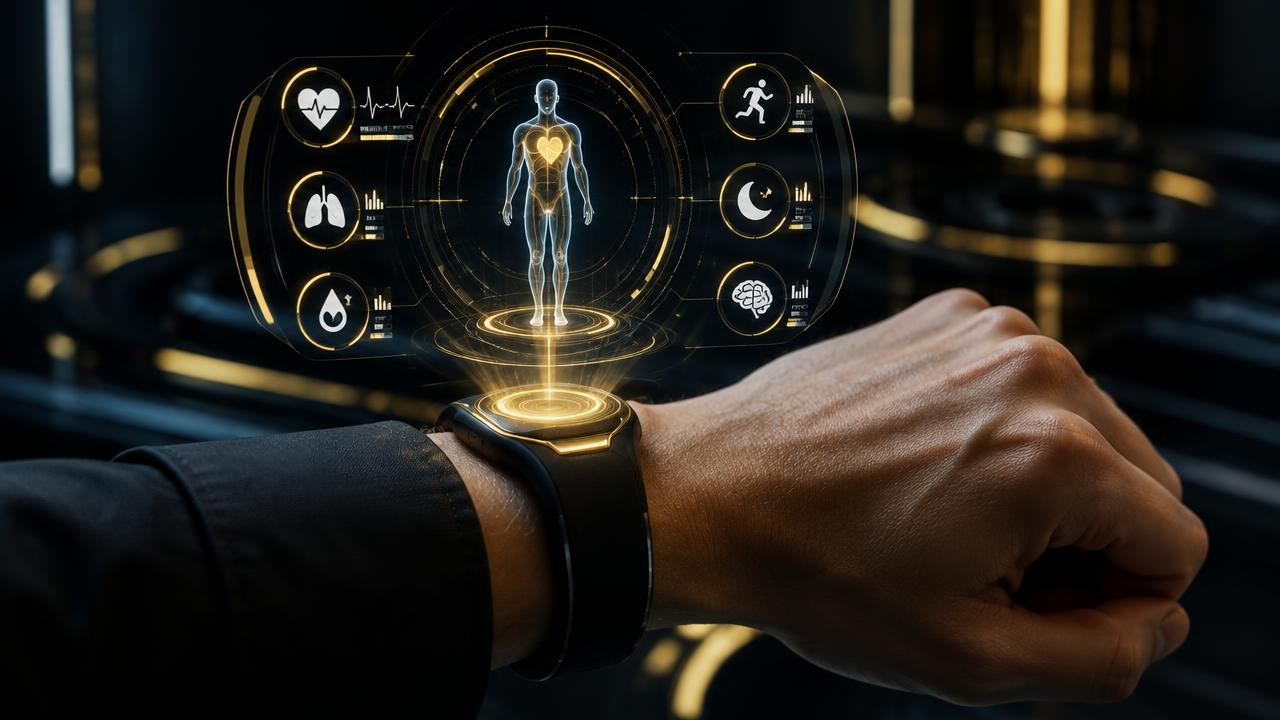
A smartwatch is a wearable computer on your wrist that goes far beyond telling time. It connects to your smartphone (or works independently) to deliver notifications, track your health and fitness, run apps, make calls, and even monitor serious medical conditions like sleep apnea, high blood pressure, and heart rhythm abnormalities.
In 2026, smartwatches have evolved into full-fledged health tracking platforms that combine fitness insights, safety tools, and deep smartphone integration. This guide explains what a smartwatch is, how it works, key features, top models in 2026, and how to choose the right one for your needs.
1. What Exactly is a Smartwatch?
A smartwatch is a wearable device that combines traditional watch functions with smartphone-like capabilities.
Core Functions
- Timekeeping: Displays time, date, alarms, timers, and world clocks.
- Notifications: Shows calls, texts, emails, app alerts, and calendar reminders from your paired smartphone.
- Health & Fitness Tracking: Monitors heart rate, steps, calories, sleep, blood oxygen (SpO2), ECG, stress, skin temperature, and more.
- GPS & Navigation: Tracks runs, rides, hikes without needing your phone; some models offer turn-by-turn navigation and topographic maps.
- Apps & Voice Assistants: Runs third-party apps (music, payments, weather, news) and supports Siri, Google Assistant, or Bixby.
- Calls & Messages: Make/receive calls and reply to texts directly from your wrist (LTE models work independently of your phone).
📌 Key Difference: Unlike a traditional watch, a smartwatch is a mini-computer that extends your smartphone’s functionality to your wrist.
2. How Does a Smartwatch Work?
A smartwatch works by connecting to your smartphone via Bluetooth (or Wi-Fi/LTE for standalone models) and syncing data through a companion app.
Key Components
| Component | Function |
|---|---|
| Processor | Runs the operating system (WatchOS, WearOS, GarminOS, ZeppOS, etc.). |
| Sensors | Optical heart rate, ECG, SpO2, accelerometer, gyroscope, GPS, altimeter, skin temperature, microphone, speaker. |
| Display | AMOLED, OLED, or LCD touchscreen (always-on or raise-to-wake). |
| Battery | Lithium-ion, typically 1–10 days depending on usage and model. |
| Connectivity | Bluetooth, Wi-Fi, LTE (optional), NFC (for payments like Apple Pay/Google Pay). |
| Storage | 8–32 GB for apps, music, and offline maps. |
Data Flow
- Sensors collect data (heart rate, steps, GPS, sleep).
- Processor analyzes data and displays insights on the screen.
- Data syncs to your smartphone via Bluetooth/Wi-Fi/LTE.
- Companion app (Apple Health, Samsung Health, Garmin Connect) stores and visualizes long-term trends.
- Cloud backup (optional) for historical data and cross-device access.
💡 Note: Most smartwatches require a paired smartphone for full functionality, but LTE models (Apple Watch Ultra 3, Samsung Galaxy Watch 8 LTE, Garmin Fenix 8 LTE) can work independently for calls, messages, and streaming.
3. Key Features of Modern Smartwatches (2026)
Smartwatches in 2026 offer a wide range of features, from basic notifications to advanced medical monitoring.
Health & Fitness Tracking
| Feature | What It Does | Available On |
|---|---|---|
| Heart Rate Monitor | Continuous or on-demand heart rate tracking during rest and exercise. | All major smartwatches (Apple, Samsung, Garmin, Google, etc.) |
| ECG (Electrocardiogram) | Records heart rhythm to detect atrial fibrillation (AFib). | Apple Watch Series 11/SE 3/Ultra 3, Samsung Galaxy Watch 8/9, Garmin Venu 4/Fenix 8, Google Pixel Watch 4 |
| Blood Oxygen (SpO2) | Measures oxygen saturation in your blood (useful for altitude, sleep, respiratory health). | Apple Watch Series 11/Ultra 3, Samsung Galaxy Watch 8/9, Garmin Venu 4/Fenix 8, Google Pixel Watch 4, Amazfit Active 3 Premium |
| Sleep Tracking | Monitors sleep stages (light, deep, REM), sleep score, and provides insights. | All major smartwatches, with advanced coaching on Apple Watch (Sleep Score), Samsung (Sleep Coaching), Garmin (Sleep Score + HRV). |
| Sleep Apnea Detection | FDA-cleared feature to detect signs of sleep apnea using heart rate and breathing patterns. | Apple Watch Series 11/Ultra 3 (watchOS 26) |
| Hypertension Notifications | Alerts you to high blood pressure trends over 30 days using optical heart sensor. | Apple Watch Series 11/Ultra 3 (watchOS 26) |
| Skin Temperature | Tracks nightly skin temperature variation (useful for illness detection, cycle tracking). | Apple Watch Series 11/Ultra 3, Samsung Galaxy Watch 8/9, Garmin Venu 4/Fenix 8, Google Pixel Watch 4 |
| Stress Monitoring | Measures stress levels using heart rate variability (HRV) and provides breathing exercises. | Samsung Galaxy Watch 8/9, Garmin Venu 4/Fenix 8, Google Pixel Watch 4 |
| Body Composition (BIA) | Estimates skeletal muscle mass, body fat %, BMI using bioelectrical impedance. | Samsung Galaxy Watch 8/9 (BioActive sensor) |
| Blood Glucose (Estimate) | Non-invasive blood glucose trend estimation (not medical-grade). | Samsung Galaxy Watch 8/9 (experimental feature) |
| VO2 Max | Estimates cardiovascular fitness level based on heart rate and pace. | Garmin Venu 4/Fenix 8, Apple Watch Ultra 3, Samsung Galaxy Watch 8/9 |
| Training Load & Recovery | Analyzes workout intensity, recovery time, and suggests rest days. | Garmin Fenix 8/Venu 4, Apple Watch Ultra 3 (Workout Buddy AI coach) |
| GPS & Multi-Band GNSS | Tracks runs, rides, hikes without phone; multi-band for better accuracy in cities/forests. | Garmin Fenix 8 (multi-band), Apple Watch Ultra 3 (multi-band), Samsung Galaxy Watch 8/9, Google Pixel Watch 4 |
Safety & Emergency Features
| Feature | What It Does | Available On |
|---|---|---|
| Fall Detection | Detects hard falls and automatically calls emergency services if you’re unresponsive. | Apple Watch Series 11/SE 3/Ultra 3, Samsung Galaxy Watch 8/9, Google Pixel Watch 4 |
| Crash Detection | Detects car crashes and automatically calls emergency services. | Apple Watch Series 11/Ultra 3, Samsung Galaxy Watch 8/9 |
| Siren & Flashlight | 86-decibel siren and built-in LED flashlight for emergencies. | Apple Watch Ultra 3, Garmin Fenix 8 (LED flashlight) |
| International Emergency Calling | Call local emergency services even without cellular service (via satellite on Ultra 3). | Apple Watch Ultra 3 (satellite SOS) |
Smart Features
| Feature | What It Does | Available On |
|---|---|---|
| Notifications | Calls, texts, emails, app alerts, calendar reminders. | All smartwatches |
| Voice Assistant | Siri (Apple), Google Assistant (WearOS), Bixby (Samsung). | Apple Watch (Siri), Samsung/Garmin/Google (Google Assistant/Bixby) |
| Apps | Third-party apps for music, payments, weather, news, productivity. | Apple Watch (App Store), Samsung/Garmin/Google (Google Play/Garmin IQ) |
| Music Storage | Store 500–2,000 songs offline for playback without phone. | Apple Watch (500 songs), Samsung (500 songs), Garmin (2,000 songs) |
| Streaming Music | Stream Spotify, Deezer, Apple Music directly from the watch. | Apple Watch, Samsung Galaxy Watch, Garmin Venu 4/Fenix 8, Google Pixel Watch 4 |
| NFC Payments | Apple Pay, Google Pay, Samsung Pay for contactless payments. | Apple Watch, Samsung Galaxy Watch, Google Pixel Watch, Garmin (Garmin Pay) |
| LTE Connectivity | Make calls, send texts, stream music without phone (requires cellular plan). | Apple Watch Ultra 3 (LTE), Samsung Galaxy Watch 8/9 (LTE), Garmin Fenix 8 (LTE) |
4. Smartwatch vs. Traditional Watch vs. Fitness Tracker
Not all wrist-worn devices are the same. Here’s how they differ:
| Feature | Smartwatch | Traditional Watch | Fitness Tracker |
|---|---|---|---|
| Primary Function | Notifications, health tracking, apps | Timekeeping, style | Basic fitness tracking (steps, heart rate) |
| Display | Touchscreen (AMOLED/OLED/LCD) | Analog or digital, no touch | Small OLED/LCD, no touch or basic touch |
| Battery Life | 1–10 days (smartwatches), 1–2 days (full-featured) | 1–10 years (quartz), 10–50 years (mechanical) | 5–30 days |
| Health Sensors | ECG, SpO2, HR, sleep, temperature, stress | None | HR, steps, sleep (basic) |
| GPS | Built-in GPS (most models) | None | Built-in GPS (some models) |
| Apps & Voice | Yes (third-party apps, Siri/Google Assistant) | No | Limited or none |
| Calls & Messages | Yes (Bluetooth or LTE) | No | No (some can display notifications) |
| Price Range | $200–$1,500+ | $50–$100,000+ | $50–$300 |
| Best For | Tech enthusiasts, health-conscious users, athletes | Style, tradition, luxury collectors | Basic fitness tracking, budget-conscious users |
💡 Rule of Thumb: If you want notifications, apps, and advanced health tracking, choose a smartwatch. If you want style and tradition, choose a traditional watch. If you want basic fitness tracking on a budget, choose a fitness tracker.
5. Top Smartwatches in 2026: Comparison
Here are the best smartwatches in 2026, compared by key specs:
Flagship Smartwatches (Best Overall)
| Model | Best For | Battery Life | Display | Health Features | GPS | Price (2026) | Compatibility |
|---|---|---|---|---|---|---|---|
| Apple Watch Series 11 | Overall best, iPhone users | Up to 24 hrs | Always-On OLED | ECG, SpO2, sleep apnea, hypertension, HRV, skin temp | Multi-band | ~$399 | iPhone only |
| Apple Watch Ultra 3 | Serious athletes, outdoor adventurers | Up to 42 hrs | Always-On OLED (2,000 nits) | ECG, SpO2, sleep apnea, hypertension, HRV, skin temp, dive computer (40m) | Multi-band + SatIQ | ~$799 | iPhone only |
| Samsung Galaxy Watch 8 | Android users, all-rounder | Up to 40 hrs | AMOLED (rotating bezel) | ECG, SpO2, BIA (body composition), blood glucose (est.), sleep coaching, skin temp | Multi-band | ~$299 | Android (best with Galaxy) |
| Samsung Galaxy Watch 9 | Premium Android, LTE | Up to 5 days | AMOLED (rotating bezel, 100-m water resistance) | ECG, SpO2, BIA, blood glucose (est.), sleep coaching, skin temp | Multi-band + 5G LTE | ~$399 | Android (best with Galaxy) |
| Google Pixel Watch 4 | Android users, Google ecosystem | Up to 40 hrs | AMOLED | ECG, SpO2, sleep tracking, skin temp, stress monitoring | Multi-band | ~$349 | Android only |
| Garmin Venu 4 | Fitness & style, all platforms | Up to 10 days | AMOLED (1,000 nits) | ECG, SpO2, HRV, skin temp, sleep score, VO2 max, training load | Multi-band | ~$549 | iPhone + Android |
| Garmin Fenix 8 AMOLED | Serious athletes, outdoor | Up to 29 days | AMOLED (1,000 nits, sapphire) | ECG, SpO2, HRV, skin temp, sleep score, VO2 max, training load, dive computer (40m), topographic maps | Multi-band + SatIQ | ~$1,000 | iPhone + Android |
| Amazfit Active 3 Premium | Budget-friendly, all platforms | Up to 25 days | AMOLED | SpO2, HR, sleep tracking, stress monitoring | Standard GPS | ~$150 | iPhone + Android |
💡 Key Takeaway: The best smartwatch is the one that works with your phone. Apple Watch only pairs with iPhone, Samsung reserves some health features for Galaxy phones, and Garmin works with both but shines for athletes.
6. How to Choose the Right Smartwatch for You
Choosing the right smartwatch depends on your smartphone, budget, health goals, and lifestyle.
Step 1: Check Smartphone Compatibility
- iPhone Users: Apple Watch (Series 11, SE 3, Ultra 3) is the only option, but it’s the most seamlessly integrated.
- Android Users: Samsung Galaxy Watch 8/9, Google Pixel Watch 4, Garmin Venu 4/Fenix 8, Amazfit Active 3 Premium.
- Cross-Platform: Garmin (Venu 4, Fenix 8) and Amazfit work with both iPhone and Android.
Step 2: Define Your Priorities
| Priority | Best Smartwatch Options | Why |
|---|---|---|
| Health Monitoring | Apple Watch Series 11/Ultra 3, Samsung Galaxy Watch 8/9 | ECG, SpO2, sleep apnea, hypertension, skin temp, BIA (Samsung), blood glucose estimate (Samsung). |
| Fitness & Training | Garmin Fenix 8, Venu 4, Apple Watch Ultra 3 | VO2 max, training load, recovery metrics, topographic maps, dive computer. |
| Battery Life | Garmin Fenix 8 (29 days), Venu 4 (10 days), Amazfit Active 3 Premium (25 days) | Ideal for multi-day hikes, travel, or users who hate daily charging. |
| Budget-Friendly | Amazfit Active 3 Premium (~$150), Apple Watch SE 3 (~$249) | Solid health tracking, GPS, notifications at a lower price. |
| Luxury & Style | Garmin Fenix 8 (titanium/sapphire), Apple Watch Ultra 3 (titanium) | Premium materials, sapphire glass, rugged design. |
| Standalone Use (LTE) | Apple Watch Ultra 3 (LTE), Samsung Galaxy Watch 9 (5G LTE), Garmin Fenix 8 (LTE) | Make calls, send texts, stream music without your phone. |
Step 3: Consider Battery Life
- Daily Charging: Apple Watch (24–42 hrs), Samsung Galaxy Watch (40 hrs–5 days), Google Pixel Watch 4 (40 hrs).
- Multi-Day Battery: Garmin Venu 4 (10 days), Fenix 8 (29 days), Amazfit Active 3 Premium (25 days).
💡 Tip: If you hate daily charging, choose Garmin or Amazfit. If you prioritize health features and don’t mind daily charging, choose Apple Watch or Samsung Galaxy Watch.
Step 4: Health Features That Matter to You
- ECG & AFib Detection: Apple Watch Series 11/Ultra 3, Samsung Galaxy Watch 8/9, Garmin Venu 4/Fenix 8, Google Pixel Watch 4.
- Sleep Apnea Detection: Apple Watch Series 11/Ultra 3 (FDA-cleared).
- Hypertension Notifications: Apple Watch Series 11/Ultra 3 (30-day trend monitoring).
- Body Composition (BIA): Samsung Galaxy Watch 8/9 (skeletal muscle mass, body fat %).
- Blood Glucose Estimate: Samsung Galaxy Watch 8/9 (experimental, not medical-grade).
- Advanced Training Metrics: Garmin Fenix 8/Venu 4 (VO2 max, training load, recovery time, HRV status).
Step 5: Set Your Budget

| Budget Range | Best Options | What You Get |
|---|---|---|
| Under $200 | Amazfit Active 3 Premium (~$150), Apple Watch SE 3 (~$249 on sale) | Basic health tracking, GPS, notifications. |
| $200–$400 | Apple Watch Series 11 (~$399), Samsung Galaxy Watch 8 (~$299), Google Pixel Watch 4 (~$349) | Full health suite (ECG, SpO2, sleep apnea), GPS, apps, voice assistant. |
| $400–$600 | Apple Watch Ultra 3 (~$799), Samsung Galaxy Watch 9 (~$399), Garmin Venu 4 (~$549) | Premium materials, advanced health features, LTE (optional), longer battery. |
| $600+ | Garmin Fenix 8 (~$1,000), Apple Watch Ultra 3 (titanium, ~$799) | Topographic maps, dive computer, multi-band GPS, sapphire glass, 29-day battery (Fenix 8). |
7. Common Myths About Smartwatches
Let’s debunk some common misconceptions:
Myth 1: “Smartwatches are just expensive fitness trackers.”
- Reality: Modern smartwatches are full-fledged health platforms with ECG, sleep apnea detection, hypertension monitoring, and AI coaching (Apple’s Workout Buddy). They also run apps, make calls, and support payments.
Myth 2: “Battery life is terrible.”
- Reality: While Apple Watch and Samsung Galaxy Watch last 1–2 days, Garmin and Amazfit offer 10–29 days of battery life. Choose based on your priorities: health features (Apple/Samsung) vs. battery life (Garmin/Amazfit).
Myth 3: “Smartwatches aren’t accurate for health tracking.”
- Reality: Modern smartwatches use medical-grade sensors (ECG, SpO2, skin temp) and FDA-cleared algorithms (sleep apnea, hypertension). While not a replacement for medical devices, they provide highly accurate trends for proactive health management.
Myth 4: “You need to charge it every night.”
- Reality: Only true for Apple Watch and some Samsung/Google models. Garmin and Amazfit last 10–29 days on a single charge.
Myth 5: “Smartwatches are only for athletes.”
- Reality: While Garmin dominates for serious athletes, Apple Watch and Samsung Galaxy Watch are designed for everyone—from casual users to health-conscious individuals to outdoor adventurers.
8. The Future of Smartwatches (2027 and Beyond)
Smartwatches are evolving rapidly. Here’s what to expect in the near future:
- Non-Invasive Blood Glucose Monitoring: Samsung and Apple are working on true non-invasive glucose tracking (not just estimates).
- Advanced AI Health Coaching: Apple’s Workout Buddy (AI-generated pep talks) is just the beginning. Expect personalized workout plans, nutrition advice, and mental health coaching.
- Longer Battery Life: Solid-state batteries and more efficient processors could push battery life to 7–14 days even for full-featured smartwatches.
- More Medical-Grade Features: Expect FDA clearance for blood pressure monitoring, glucose trends, and early illness detection (fever, respiratory issues).
- Satellite Connectivity: More models will offer satellite SOS and two-way messaging for emergencies in remote areas (like Apple Watch Ultra 3).
💡 Bottom Line: Smartwatches are no longer just gadgets—they’re essential health and safety tools that will only get more advanced in the coming years.
9. In Summary: What is a Smart Watch?
A smartwatch is a wearable computer that extends your smartphone’s functionality to your wrist, offering:
- Notifications (calls, texts, emails, apps).
- Health & Fitness Tracking (ECG, SpO2, sleep, stress, body composition).
- GPS & Navigation (runs, hikes, topographic maps).
- Apps & Voice Assistants (Siri, Google Assistant, Bixby).
- Safety Features (fall detection, crash detection, emergency SOS).
- Standalone Use (LTE models for calls, texts, music without phone).
💡 Final Advice: The best smartwatch is the one that works with your phone and fits your lifestyle. For iPhone users, Apple Watch Series 11/Ultra 3 is unmatched. For Android users, Samsung Galaxy Watch 8/9 or Garmin Venu 4/Fenix 8 are top choices. For budget-conscious buyers, Amazfit Active 3 Premium offers incredible value.